Buddhism & Righteous Anger — The Real Teaching
First off, I will probably repeat this many times. There is no “Good” or “Bad” necessarily in Buddhism; there is only what is considered “Skillful” or “Unskillful”.
Most people think Buddhism = “never get angry.”
That’s not just wrong, it’s spiritual gaslighting.
Buddhism doesn’t forbid anger.
It forbids unskillful anger. That reactive, ego-driven kind that harms you and everyone else.
But righteous anger, aka anger rooted in compassion, is absolutely recognized and respected.
🔥 There Are TWO Kinds of Anger in Buddhism
❌ 1. Unskillful Anger (Hot Anger)
This is:
- reactive
- ego-driven
- punishing
- hateful
- chaotic
- the “I’m gonna ruin your day because mine is ruined” anger
This causes suffering (dukkha) and binds you to samsara.
✔️ 2. Skillful Anger (Righteous / Compassionate Anger)
This is:
- protective
- clear-headed
- rooted in compassion
- directed at injustice, not people
- focused on reducing harm
It’s the “I refuse to let harm continue” energy.
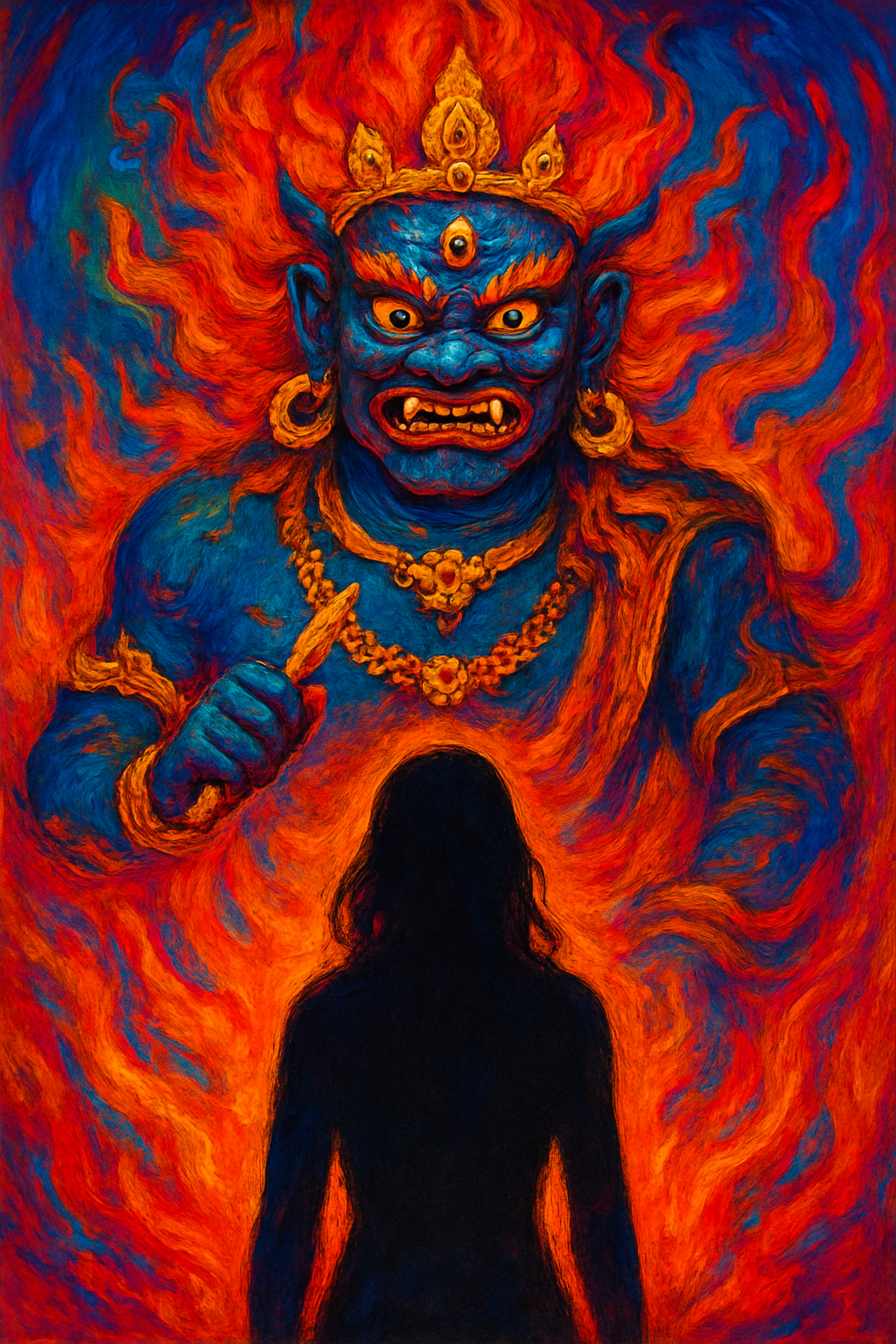
In Mahayana & Vajrayana Buddhism this is embodied by wrathful Bodhisattvas — beings who LOOK angry but act purely out of compassion.
Their anger is medicine, not poison.
🔱 Fierce Compassion: The Buddhist Term for Righteous Anger
This is when anger arises because you care.
Not because your ego is bruised.
Examples:
- stopping abuse
- protecting marginalized groups
- challenging injustice
- disrupting harmful systems
- speaking truth to power
The Buddha himself used strong, fiery speech when compassion demanded it.
Anger is allowed.
Hatred is not.
🌊 Hot Anger vs. Cold Anger
Zen teaches:
🔥 Hot Anger
- impulsive
- explosive
- messy
- causes suffering
❄️ Cold Anger
- intentional
- steady
- grounded
- focused on justice
Cold anger is skillful.
Hot anger consumes you.
☸️Buddhism Asks One Question:
“WHAT is this anger made of?”
Is it made of:
- compassion?
- protection?
- love?
- clarity?
Or is it made of:
- ego?
- fear?
- hatred?
- wanting control?
That’s the difference between enlightenment and disaster.
🌈 Engaged Buddhism Says Anger Can Be “Holy“
Thich Nhat Hanh , the literal king of peaceful activism , said:
“If we do not have anger, we are not alive.”
But he also said:
“Anger must be used like fuel — carefully, so it does not burn us.”
Righteous anger becomes:
- activism
- truth-telling
- boundary-setting
- courage
NOT destruction.
💎 The Buddhist Sweet Spot
Buddhism encourages:
✨ Clarity — see injustice
✨ Courage — speak up
✨ Compassion — avoid hatred
✨ Wisdom — act skillfully
✨ Presence — don’t be consumed
If anger reduces harm → it’s righteous.
If anger increases harm → it’s unskillful.
☸️ 💪 If one cannot protect oneself, how can they protect others? Abusive relationships and righteous anger.
Fierce compassion is boundary-setting as a spiritual practice. It is protection instead of passivity and self-respect instead of self-abandonment. In Buddhism, compassion includes YOUR suffering, not just theirs.
Dhammapada 166
This is the OG self-preservation teaching.
The Buddha literally said:
“Do not neglect your own welfare for the welfare of another.”
Meaning:
- Don’t help people in ways that destroy you.
- Don’t sacrifice your mental health to save someone else’s chaos.
- Don’t set yourself on fire to keep others warm.
Helping others starts with not harming yourself.
KEY POINTS:
- Soft compassion = patience, gentleness, forgiveness. (Always good qualities to keep, but sometimes we lean to hard into “Let it slide” until we’ve slid ourselves into a cage)
- Fierce compassion = boundaries, protection, clarity, refusal to enable harm. (If someone doesn’t respect your reasonable boundaries or gets offended when you stand up for yourself……maybe its time to cut that loss)
- Ending or limiting contact is sometimes the most compassionate act for both people. (Less “Stay together for the kids” and more “the kids shouldn’t grow up in this unhealthy environment”-believe me, I made this HUGE mistake for over 10 years and I am still trying to make up for that damage to my kids who are almost all adults now.)
- Compassion that harms yourself is ignorance. Compassion that includes yourself is wisdom. (Ignorange=Unskillful)
- There are literally wrathful deities (Vajrapani, Mahakala, Fudo Myoo) in most Buddhist traditions who represent compassionate protection. (Mahakala is my spirit animal)
In abusive relationships (including family):
- You may understand someone’s pain without accepting their harm.
- Walking away breaks generational karma.
- Fierce compassion protects your inner child.
- Forgiveness ≠ reconciliation.
- Boundaries are the Buddhist expression of wisdom.
You can say: “I see your suffering, but I refuse to sacrifice myself to it.”
Make this your daily mantra:
A lotus grows out of mud — but it does NOT drown in the mud to help other flowers.
It rises first.
Then its existence inspires others to rise.
You lift others by lifting yourself first.
Say it over and over every day, until you believe it.


Leave a Reply