Lazy 8 Breathing: A Simple Technique Backed by Real Neuroscience
When stress spikes, your nervous system doesn’t care about positive thinking. It cares about signals of safety.
Lazy 8 breathing is a simple, evidence-informed technique that combines slow breathing, bilateral movement, and visual focus to help calm the nervous system. It’s intentionally gentle, accessible, and effective even when your brain feels like it’s running twelve tabs at once.
This isn’t a random calming exercise someone made up on the internet. It’s grounded in how the brain and body actually regulate stress.
What Is Lazy 8 Breathing?
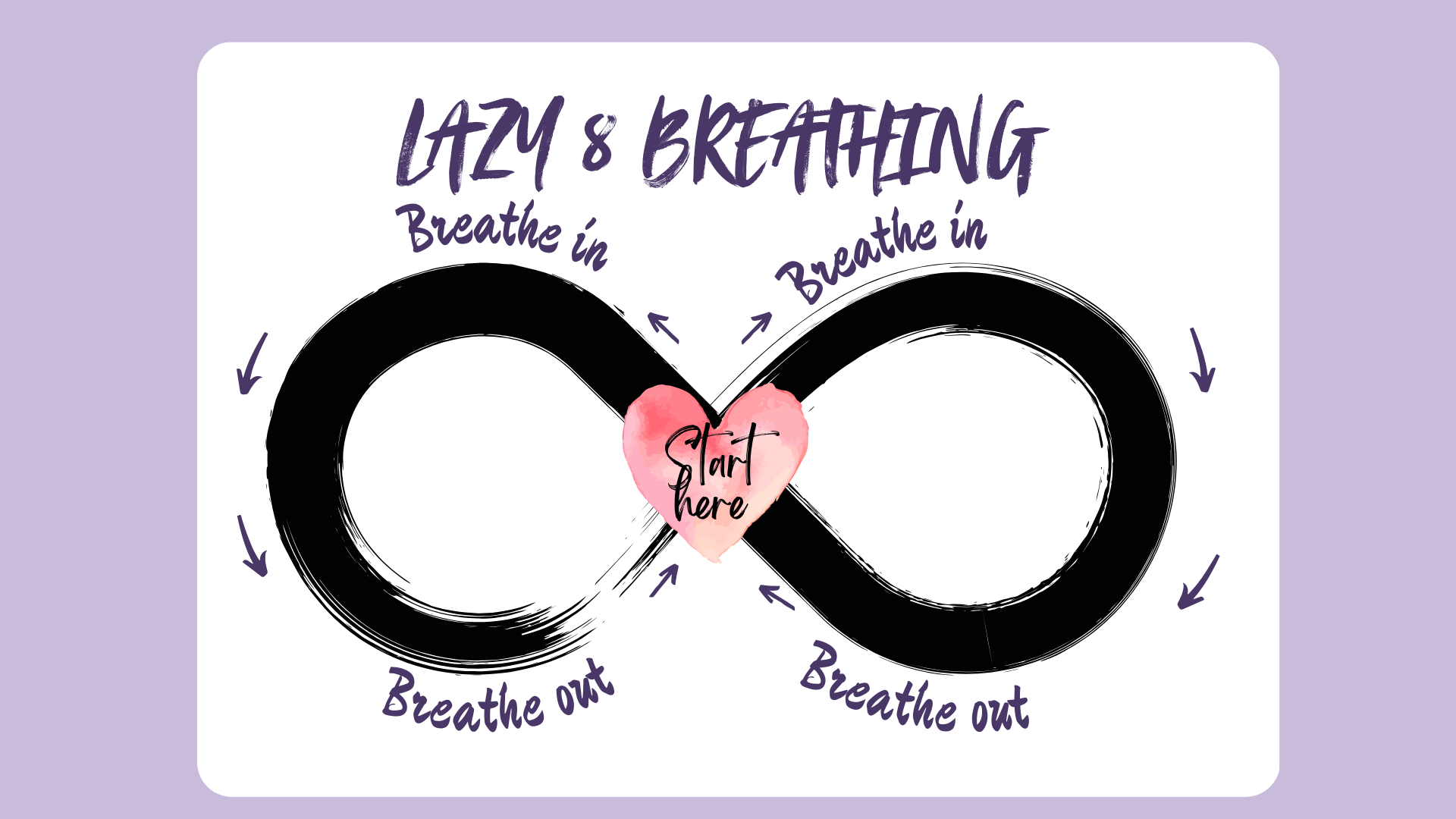
Lazy 8 breathing uses a sideways figure eight pattern paired with slow, steady breaths. As you trace the shape, you inhale on one side of the loop and exhale on the other.
The shape matters. The movement matters. The breath matters.
Together, they help your body shift out of stress mode and into a more regulated state.
Why Lazy 8 Breathing Works (The Short Version)
Lazy 8 breathing helps by:
- Slowing your breathing rate
- Engaging both hemispheres of the brain
- Activating the parasympathetic nervous system (the “rest and digest” response)
In plain language: it helps tell your nervous system that you’re safe enough to relax.
The Science Behind Lazy 8 Breathing (Still Human-Readable)
Slow Breathing and the Vagus Nerve
Slow, controlled breathing stimulates the vagus nerve, a major pathway involved in emotional regulation and stress recovery. When the vagus nerve is activated, heart rate slows, muscle tension decreases, and stress hormones begin to drop.
This is a physiological response, not a mindset trick.
Bilateral Stimulation Supports Emotional Regulation
Tracing the left and right loops of the figure eight provides bilateral stimulation, meaning it activates both sides of the brain in a rhythmic pattern. Similar principles are used in trauma-informed therapies such as EMDR.
Bilateral stimulation has been shown to:
- Reduce emotional intensity
- Improve focus
- Support processing during stress
Your brain responds well to rhythm and balance. The lazy 8 delivers both.
Visual Tracking Helps Ground Attention
Following the shape with your eyes or finger gives your brain a neutral focal point. This can help interrupt racing thoughts without forcing silence or “clearing your mind,” which often backfires during anxiety or overwhelm.
This makes Lazy 8 breathing especially useful for anxiety, trauma responses, ADHD, and sensory overload.
How to Use the Lazy 8 Breathing Printable
Start at the center of the figure eight.
Inhale slowly as you trace one loop.
Exhale as you cross the center and trace the other loop.
Repeat for 2–5 minutes, or until your body feels a little less tense.
You don’t need to feel instantly calm.
A small shift still counts.
Download the Lazy 8 Breathing Printable
Use the printable below as a guided breathing exercise you can keep on hand for stressful moments
When This Technique Can Be Helpful
Lazy 8 breathing may be especially useful when:
- Traditional meditation feels impossible
- Your thoughts won’t slow down
- Your body feels tense, buzzy, or overstimulated
- You need something grounding but not boring
It’s simple on purpose. Your nervous system already knows what to do.
Leave a Reply