TL;DR
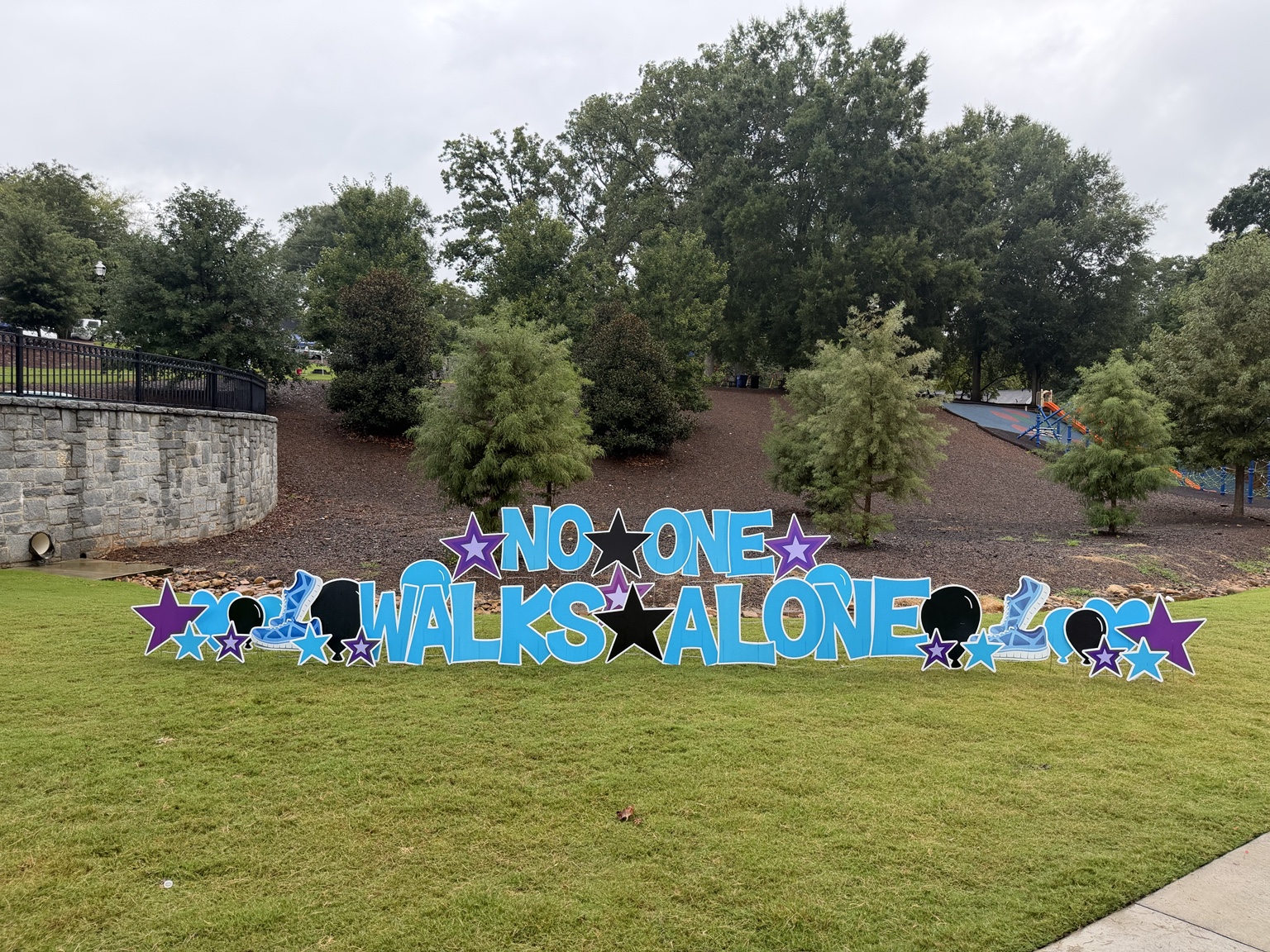
Every September, Pathways Center and AnotherWay Foundation bring No One Walks Alone to C.J. Smith Park in Newnan, Georgia. It’s a suicide prevention awareness event built around remembrance, community, mental health resources, and something I especially love: actually practicing coping skills instead of just talking about them.
I’ve taken my kids and grandkids for the past few years, and even with rain coming and going this year, people still showed up.
There were games, face painting, animals, activities, encouragement, mental health resources, and families spending time together. There were also reminders of the lives lost to suicide and resources for people who may be struggling now.
It’s a family fun day without ever forgetting why we’re there.
And that’s exactly what suicide prevention should include: giving people tools for the hard days, making professional help easier to reach for, and reminding each other that none of us should have to struggle alone.
A Suicide Prevention Event That Doesn’t Feel Like a Lecture
Every September, the organization I work for, Pathways Center, partners with AnotherWay Foundation to hold an event called No One Walks Alone at C.J. Smith Park in Newnan, Georgia.
I’ve taken my kids and grandkids for the past few years, and it’s become an event I genuinely look forward to.
Yes, it’s a suicide prevention awareness event.
It’s also full of kids running around, art, games, music, animals, community organizations and people having fun together.
Those two descriptions might sound like they shouldn’t belong to the same event.
I think that’s exactly why it works.
Suicide is incredibly serious. Talking about it should never minimize the pain of the people struggling with suicidal thoughts or the grief carried by families who have lost someone.
But suicide prevention doesn’t have to be frightening.
And mental health education doesn’t have to feel like a lecture.
Sometimes prevention looks a whole lot more ordinary than we expect.
This Year, Even the Rain Couldn’t Empty the Park

This year’s weather wasn’t exactly cooperative.
It rained on and off throughout the morning. There were wet sidewalks, gray skies, umbrellas and plenty of tents protecting activities from the weather.
People could have stayed home. Instead, they showed up.
Families came. Community organizations kept their stations going. Kids continued doing what kids do: playing, exploring, getting their faces painted and collecting every interesting object they could convince an adult to let them bring home.
Looking across the park, you could almost forget you were attending a suicide prevention event.
But reminders of why we were there were woven throughout everything.
There were teal-and-purple suicide prevention ribbons. Information about the 988 Suicide & Crisis Lifeline. Messages reminding people that they matter. Mental health professionals and organizations offering resources.
There was joy everywhere, but the joy wasn’t being used to hide the difficult stuff.
There was room for both.
And maybe that’s one of the things I love most about No One Walks Alone.
Coping Skills Don’t Always Look Profound


One of my favorite parts of this event has always been the coping-skill stations.
Throughout the park and along the walk, there are stations where you can participate in activities, learn about different coping strategies and collect stamps on a card as you go.
And these aren’t just people standing behind tables telling you that hobbies are good for your mental health.
You actually do the things.
Over the years, we’ve made sand art and watercolor paintings.
We’ve visited gardening stations. One year we went home with air plants in adorable little glass holders. Another year, there were little pots with bags of soil and seeds.
There’s usually music. One of my favorites has been the drum circle, where children and adults can grab an instrument and play together.
There have been animals to meet and sit with.
This year there were games, face painting, balloon creations, activities and tiny messages of encouragement scattered among all the more traditional mental health resources.
One of those messages came from a tiny cartoon duck assuring whoever picked it up that it believed in them.
And frankly, sometimes that’s the level of emotional support I require. 😂
But there’s something underneath the silliness that matters.
Coping skills don’t always look profound.
Sometimes they’re paint.
Sometimes they’re dirt.
Sometimes they’re music.
Sometimes they’re movement.
Sometimes they’re playing a game with your kid.
Sometimes they’re sitting next to an animal and noticing your body relax a little.
Sometimes they’re a ridiculous little duck reminding you that somebody believes in you.
The CDC includes coping and problem-solving skills, reasons for living, support from family and friends, feeling connected to others, and access to quality healthcare among factors that can help protect against suicide risk.
These little things aren’t meaningless.
They’re tools.
Mindfulness Is a Tool. It Isn’t a Replacement for Treatment.
This is also where No One Walks Alone connects so strongly with what I’m trying to do through Manic Mindfulness.
I believe in mindfulness.
I believe in learning grounding techniques, recognizing emotions, creating things, breathing, moving our bodies, spending time outside, connecting with other people and discovering all the weird little things that help our brains make it through difficult moments.
I want people to have as many tools in their mental health toolbox as possible.
But I never want someone to leave this website believing mindfulness should always be enough.
Sometimes it isn’t.
Sometimes the coping skills aren’t touching what you’re experiencing.
Sometimes you need a therapist.
Sometimes you need medication.
Sometimes you need a psychiatrist or another mental health professional.
Sometimes you need crisis care.
None of those things means you failed at coping.
Recognizing when the tools in your own toolbox aren’t enough and reaching for someone else’s hand is a coping skill, too.
That is one of the things I appreciate so much about this event. Mental health professionals aren’t hidden somewhere behind an office door.
They’re standing in the park.
They’re talking to families.
They’re answering questions.
They’re being regular human beings.
And that can make the idea of asking for help a little less intimidating.
Why I Bring My Kids and Grandkids

I’ve brought my children and grandchildren to this event for several years now.
Some people might initially find the idea of bringing children to a suicide prevention event strange.
I understand that.
But it’s actually one of the reasons I value the event so much.
My grandkids aren’t walking around listening to graphic discussions about suicide.
They’re getting their faces painted.
They’re petting animals.
They’re playing games.
They’re making things.
They’re meeting people.
They’re learning.
And somewhere underneath all of that, they’re also learning something much bigger:
Mental health is health.
Feelings aren’t shameful.
There are things we can learn to do when we’re overwhelmed.
People struggle sometimes.
Adults struggle, too.
There are professionals whose job is to help.
And asking those people for help isn’t embarrassing.
We don’t have to teach children every painful detail of the world to start teaching them how to live in it.
We can give them the language and tools to talk about mental health long before they’re in crisis.
Then There Is the Honoree Trail
There is another part of No One Walks Alone that feels very different.
The Honoree Trail is dedicated to people who have died by suicide.
Families can honor the people they’ve lost with memorials along the trail. According to reporting from the Newnan Times-Herald, organizers have increasingly included photographs alongside names because seeing the faces behind those names makes the reality of suicide impossible to reduce to statistics.
The trail can be somber.
It should be.
These were real people.
They were someone’s child.
Someone’s parent.
Someone’s sibling.
Someone’s partner.
Someone’s friend.
Someone’s coworker.
The Times-Herald reported that the trail also includes licensed counselors, including people who bring not only professional expertise but personal experience with suicide loss.
And yet, despite how emotional that part of the walk can be, I don’t leave it feeling hopeless.
I leave inspired.
Because everyone walking through that park is doing something.
Someone chose to share a photograph.
Someone chose to say a person’s name.
Someone decided another grieving family shouldn’t have to feel alone.
Someone brought their children.
Someone came because they’ve struggled themselves.
Someone learned a new coping skill.
Someone discovered a resource they didn’t know existed.
Someone met a mental health professional.
Someone may have realized for the first time that asking for help doesn’t have to be embarrassing.
That’s prevention, too.
Hundreds of People Deciding We’re Going to Talk About This
No One Walks Alone has grown tremendously.
The Times-Herald reported that roughly 300 people attended its first year, despite a storm the night before. The second year drew around 600 people, and last year’s event had more than 800 in-person attendees, with hundreds more engaging online.
And apparently the weather has decided this event needs a recurring rain subplot. 😂
But people keep coming.
That growth means something to me.
Hundreds of people are voluntarily gathering in a public park and saying:
We’re going to talk about suicide.
We’re going to remember the people we’ve lost.
We’re going to talk about depression, anxiety and grief.
We’re going to teach coping skills.
We’re going to show people where professional help exists.
We’re going to teach our kids that mental health isn’t a shameful family secret.
And we’re going to make it a little easier for the next person to say:
“I’m not okay.”
Family Fun Without Missing the Point


That’s probably the simplest way I can describe No One Walks Alone.
It’s a family fun day without missing the mark about what it’s actually about.
There are kids getting their faces painted and carrying balloon animals.
There are games and activities.
People are laughing.
Children are running around being children.
Then you’ll see a teal-and-purple suicide prevention ribbon.
You’ll pass information about 988.
You’ll read a tiny card telling you that someone believes in you.
You’ll remember why hundreds of people came to this park in the first place.
Joy and grief aren’t treated as opposites here. There’s room for both.
Maybe that’s part of what healing looks like.
Not pretending painful things aren’t there.
But not allowing those painful things to consume everything else, either.
Making room for grief.
Making room for joy.
Making room for the people we’ve lost.
And, perhaps most importantly, making room for the people who are still here.
Maybe I’ll See You Next September 💜
If you missed this year’s No One Walks Alone, remember the name.
The event is held each September at C.J. Smith Park in Newnan, and I’ll absolutely be talking about it again when next year’s details are announced.
When that time comes, bring your kids.
Bring your friends.
Bring your coworkers.
Come learn something.
Come remember someone.
Come because you’ve struggled yourself.
Come because someone you love has struggled.
Or come simply because you want people in your community who are struggling to know there are people willing to stand beside them.
My goal has never been to teach people how to never struggle.
That’s impossible.
My goal is to help people learn tools that might make the difficult moments a little more manageable, recognize when those tools aren’t enough, and feel absolutely no shame about reaching for professional help when they need it.
Because ultimately:
The goal isn’t to teach people how to never struggle. It’s to make sure fewer people believe they have to struggle alone.
💜
If You Need Help Right Now

If you are experiencing suicidal thoughts, a mental health crisis, or you’re worried about someone else, you don’t have to wait until things get worse before reaching out.
In the United States, you can call, text or chat 988 to connect with the 988 Suicide & Crisis Lifeline. The Lifeline is available 24/7/365 and provides free, confidential crisis support.
If you or someone else is in immediate physical danger, call 911 or seek emergency medical care.
Leave a Reply